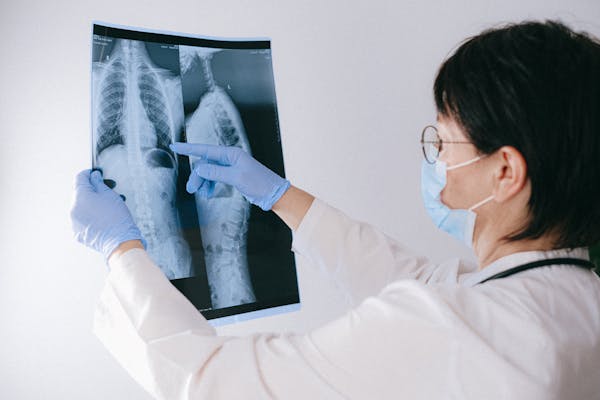
Spine doctors diagnose and treat many different spinal conditions, including degenerative disc disease and spinal stenosis. Doctors use imaging test to support their diagnostic impressions and to better to find the patient condition which helps plan treatment. At Regenerative Medicine and Orthopedics (DBA), our team utilizes imaging for both diagnosis support and treatment guidance. Here are some ways doctors use medical scans to identify underlying issues and determine suitable treatment options:
Identify Structural Abnormalities
Medical imaging allows spine doctors to visualize parts of the body that can’t be fully evaluated through a physical exam. These tests provide views of the:
- Bones
- Discs
- Joints
- Nerves
- Soft tissues
Imaging can identify a wide range of structural abnormalities. X-rays help detect fractures, misalignments, and scoliosis. MRIs provide detailed images of soft tissues, such as herniated discs and compressed nerves. These imaging tests can also help identify ligament injuries, inflammation, infections, and spinal cord abnormalities.
CT scans offer detailed cross-sectional views of bone structures. CT scans are very useful for evaluating fractures and joint degeneration, and they help show structural changes that aren’t clearly visible on standard X-rays. For patients with spinal stenosis, or narrowing of the spinal canal, a spine doctor is able to use both MRI and CT scans. These tests show the degree of canal narrowing, and they help determine if nearby nerve roots are affected by the condition.
Evaluate Tissue and Nerve Damage
For patients experiencing pain, numbness, weakness, or tingling, doctors can use advanced imaging to evaluate the soft tissues and nerve structures. The scans help determine what’s causing the patient’s symptoms. Contributing factors sometimes include inflammation, compression, or structural injury. Because MRI scans provide detailed views of nerve roots and soft tissues, they can reveal issues like torn ligaments or tumors. Imaging scans also help spine physicians determine whether symptoms stem from nerve compression or muscular strain. The scans allow the doctor to evaluate the extent of tissue damage, and they guide decisions between conservative and surgical treatments.
Review Previous Diagnostic Tests
If a patient has completed previous diagnostic scans prior to visiting a spine specialist, they can bring the images to their appointment. The specialist reviews these scans to compare past and current findings. They assess the progression of any spinal conditions, and they look for new issues that have developed.
Examining prior X-rays, MRIs, and CT scans helps confirm diagnoses and rule out potential complications. It also allows doctors to identify subtle changes in bones, discs, nerves, or soft tissues over time. This can guide decisions about the urgency and type of treatment needed. Doctors are then able to create a treatment plan that accounts for both existing problems and newly developed issues. This makes sure care is efficient and targeted. Reviewing previous imaging scans can also prevent unnecessary repeat tests.
Provide Same-Day Diagnosis and Treatment
Imaging technology allows doctors to diagnose and treat certain conditions during the same appointment. In some offices, this involves using ultrasound and fluoroscopy, or live video X-ray. Ultrasounds use sound waves to provide views of soft tissues like muscles, tendons, and joints. Spine specialists can use them in the office to assess nerve irritation and visualize soft tissue injuries. This imaging tool provides live feedback, so doctors are able to confirm the source of pain and guide treatments in the moment.
Fluoroscopy provides continuous, real-time imaging of bones and joints. In a spine practice, doctors use it to guide spinal injections and procedures. This helps them deliver medications accurately, and it can make treatments safer. Regenerative Medicine and Orthopedics (DBA) has both ultrasound and fluoroscopy available on site. This allows our team to evaluate your condition during your appointment and perform image-guided treatments, such as injections, during the same visit.
Meet With a Spine Doctor
Spine doctors use medical imaging to identify underlying issues and relieve symptoms like back pain and limited range of motion. At Regenerative Medicine and Orthopedics (DBA), we treat spinal conditions ranging from scoliosis to sciatica. We offer targeted injections to reduce swelling and inflammation, and we can complete some treatments on the same day as your diagnosis. Contact our team today to schedule a consultation and discuss your spinal health.